
Make Christians Vegan Again
Be Fruitful. Multiply Greatly.
Before MAGA. Before MAHA. Let's go back to "In the beginning…"
Page one. Chapter one. Verse twenty-nine.
Creation builds like a symphony — light, sky, water, land, creature — each day a crescendo, until it lands on its final, defining note: the climax of the first chapter of the most printed, read, and influential book on earth.
God steps back, beholds everything He has made, and gives the mandate:
"I give you every seed-bearing plant on the face of the whole earth, and every tree that has fruit with seed in it. They will be yours for food." — Genesis 1:29
A plant-based paradise.
And He called it very good.
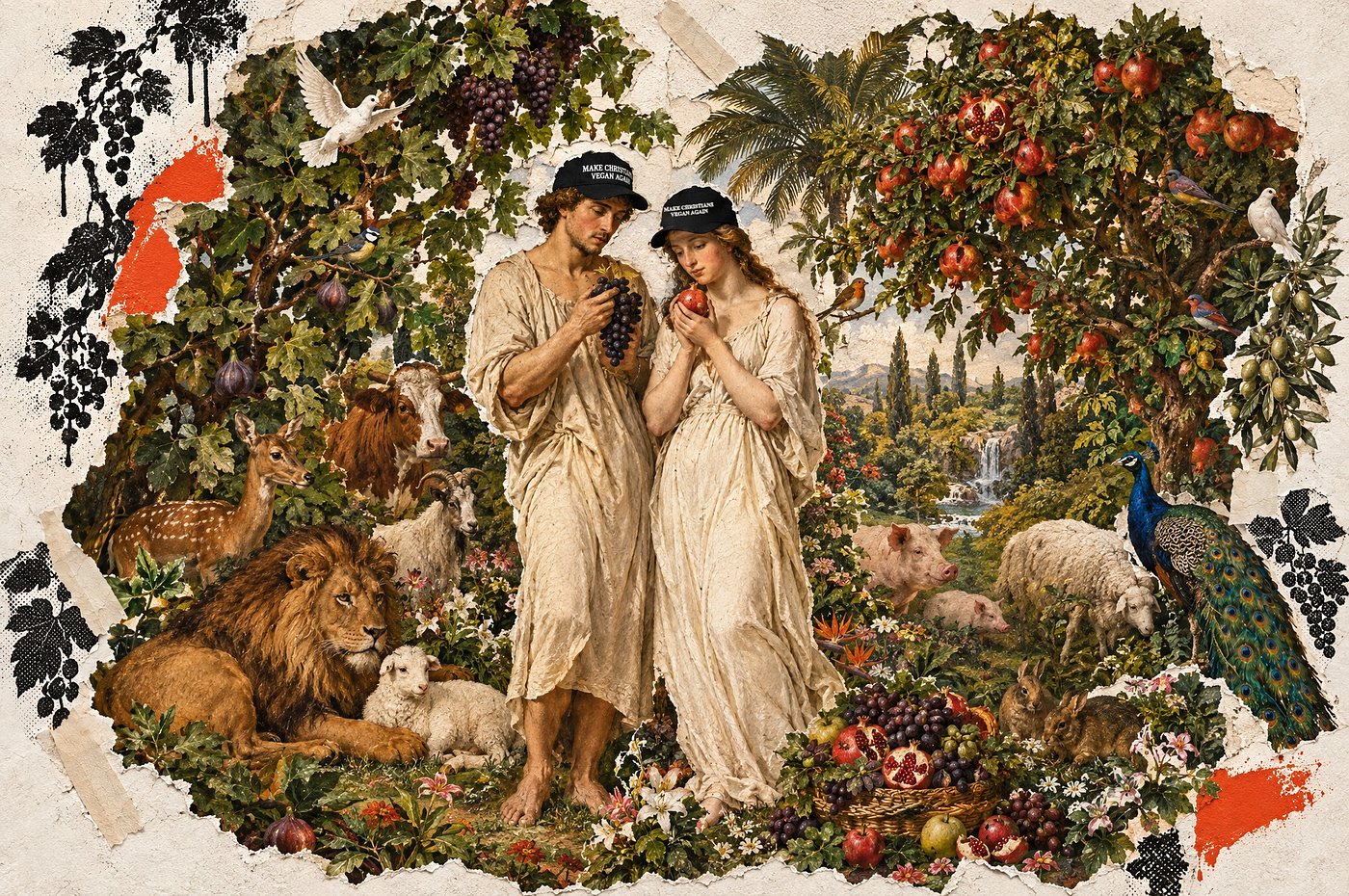
True Dominion
Genesis 1:26–29 — the passage where God grants "dominion" — holds the whole original blueprint in three movements: stewardship in service to creatures, a plant-based food mandate, and the command to be fruitful and multiply.
Dominion means care, not domination. It was never a license to kill, but a calling to tend the garden, multiply, and bear fruit.
The plant-based mandate isn't buried in a footnote. It's the headline of the whole story. Everything after — the blood, the altars, the sacrifice — was the deviation. We're going back to the source.
Jesus went back to the source, too.
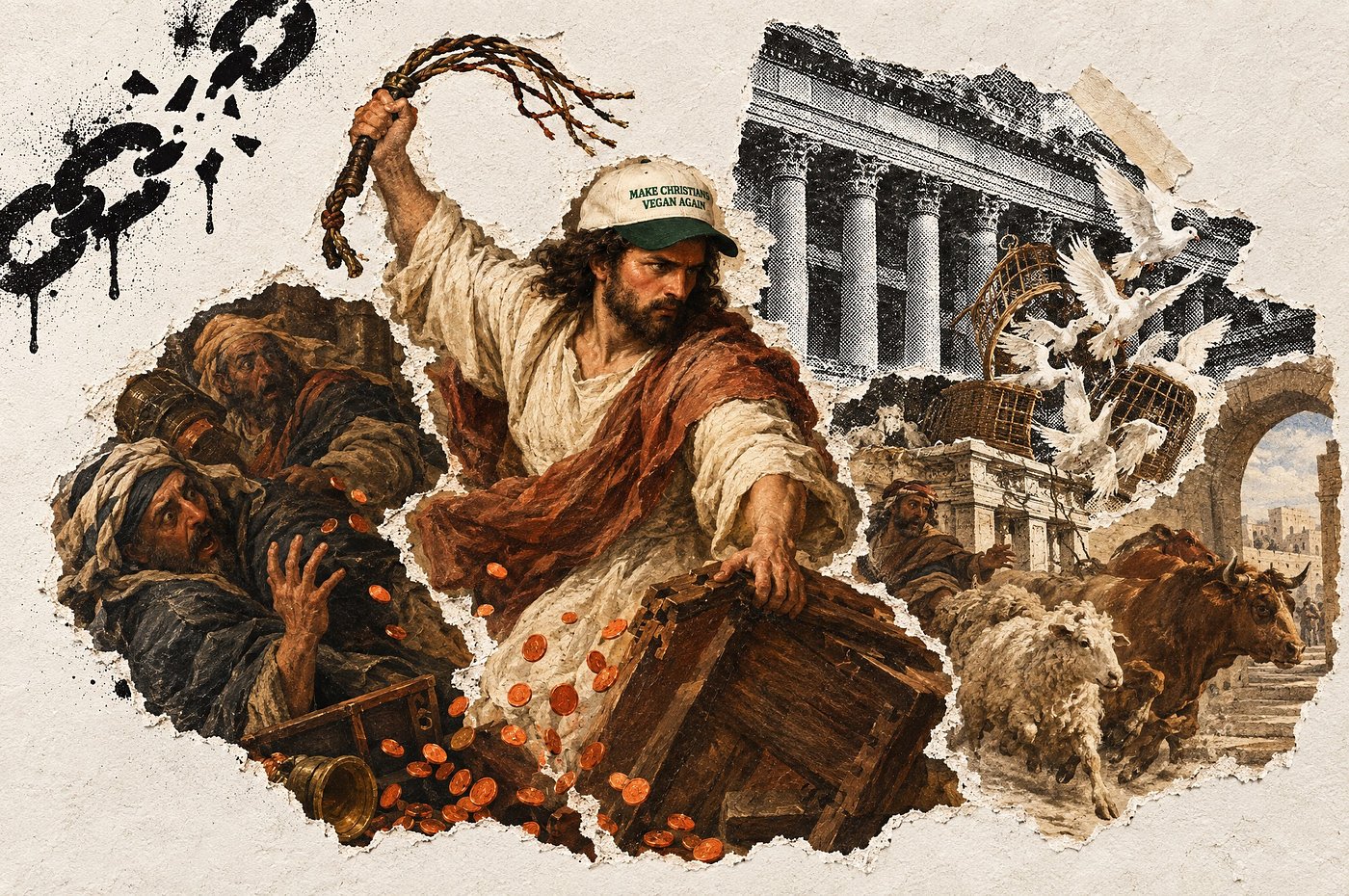
And He did it with a whip.
The Temple in Jerusalem ran on blood — animals bought, slaughtered and burned on its altars every day, by the thousands at every feast. Jesus walks into its courts, finds the dealers selling oxen, sheep and doves, and braids a whip out of cords:
"He drove them all out of the temple, and the sheep, and the oxen; and poured out the changers' money, and overthrew the tables; and said unto them that sold doves, Take these things hence." (John 2:15–16)
The animals are driven out — away from the knife and the altar. The tables go over. The money hits the floor. He won't even let anyone carry their wares through the courts (Mark 11:16). For one afternoon, the sacrifice machine stops. Call it what it was: direct action. Animal liberation, in the house of God.
It wasn't a tantrum about prices. He had already told them where He stood — "I will have mercy, and not sacrifice" (Matthew 9:13, quoting Hosea 6:6) — and in the Hebrew gospel Matthew wrote, Jesus says it plainer still: "I came to abolish the sacrifices, and if ye cease not from sacrifice, wrath will not cease from you." (Epiphanius, Panarion 30.16.5)
Cleanse the temple. Free the animals. Then He pointed to another temple. When they demanded a sign, He answered: "Destroy this temple, and in three days I will raise it up… But he spake of the temple of his body." (John 2:19, 21) Even Paul would later remind the Corinthians that your body is a temple, too. (1 Corinthians 6:19)
Three days to raise a temple. That’s where The Temple Cleanse begins — 40 days of scripture, prayer and plant-based meals, the way His first followers lived. Your first three days are free.
The chief priests heard what He'd done "and sought how they might destroy him." (Mark 11:18) Within the week, He was on a cross. But the people who watched those tables go over didn't scatter. They kept walking the path He'd opened — and they had a name for it.
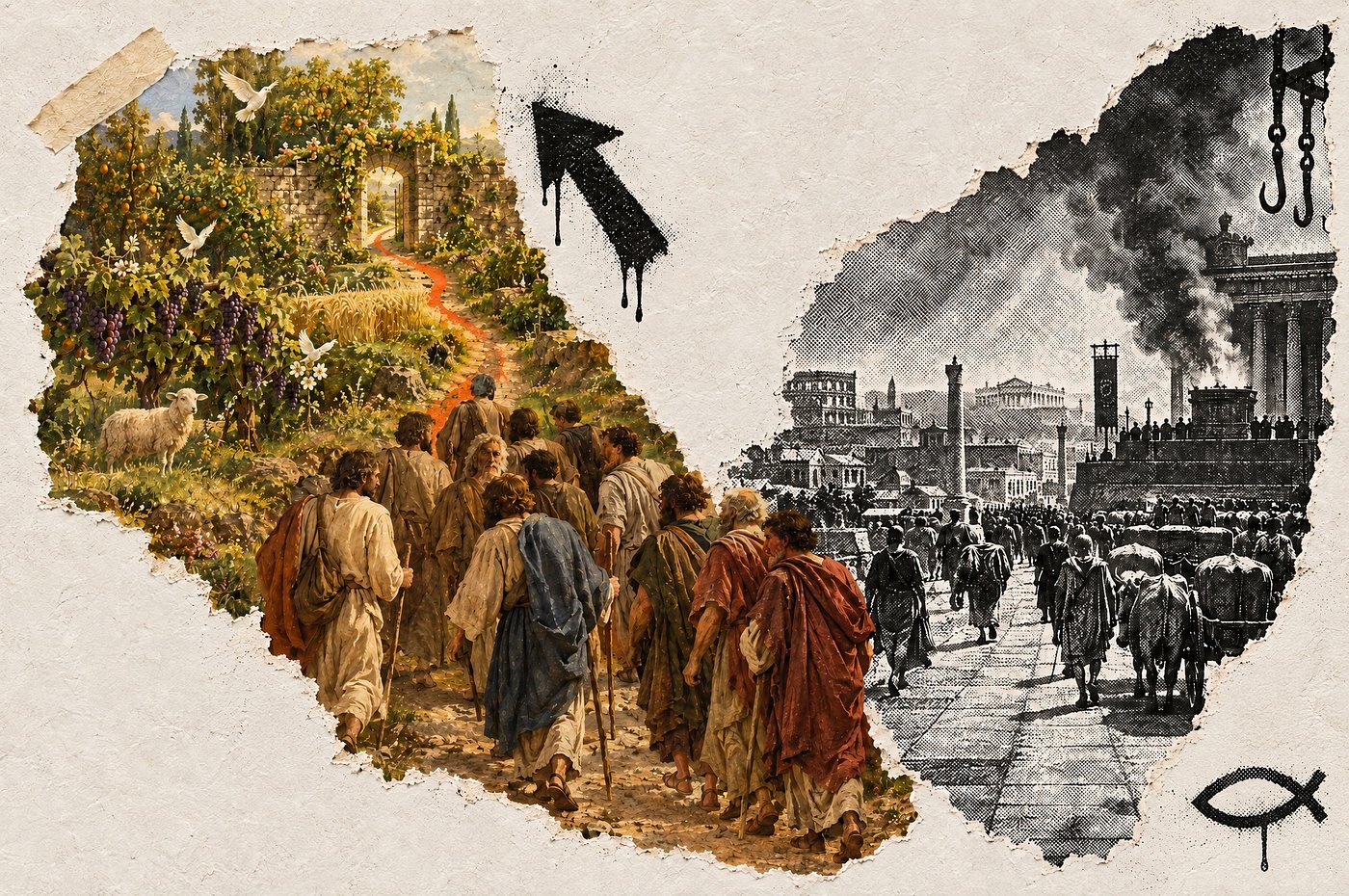
Before they were "Christians," they were The Way.
The movement Jesus launched didn't call itself Christianity. Acts calls it The Way — in Hebrew, ha-derekh — a path you walk, not just a creed you hold. Its people were the Nazarenes. Its covenant-keeping core were the Ebionim, "the poor ones," who chose covenant over empire. The name Christians came later, coined by outsiders in Antioch (Acts 11:26). It stuck. But the roots go deeper.
James — the brother of Jesus, who knew Him better than any bishop or pope ever would — led the movement from Jerusalem. What they ate matters. And we actually know.
We're walking The Way again, together — join the community →
Don't take our word for it. Take theirs.
Epiphanius of Salamis, the 4th-century heresy-hunter, says the Nasaraeans "were Jews who kept all the Jewish observances," yet "they would not offer sacrifice or eat meat" — and his Greek uses the same word, empsychon: nothing ensouled. They held it unlawful. (Panarion 18.1.4) Not a preference. Not a cultural habit. Unlawful. A hostile witness — which is exactly why it counts.
Hegesippus, the 2nd-century historian, on James himself:
"He was holy from his mother's womb; and he drank no wine nor strong drink, nor did he eat anything ensouled." (Eusebius, Church History 2.23.5)
The Greek is oude empsychon ephage. Empsychon means "ensouled" — anything with a soul. Not just red meat: the flesh of every ensouled being.
And the apostles? Eusebius — the father of church history — describes the disciples of Jesus as poor, plain men who “embraced and persevered in a strenuous and a laborious life, with fasting and abstinence from wine and meat.” (Proof of the Gospel 3.5) Clement of Alexandria: “the apostle Matthew partook of seeds, and nuts, and vegetables, without flesh.” (Paedagogus 2.1) Peter, in the Clementines: “I use only bread and olives, and rarely pot-herbs.” (Homilies 12.6)
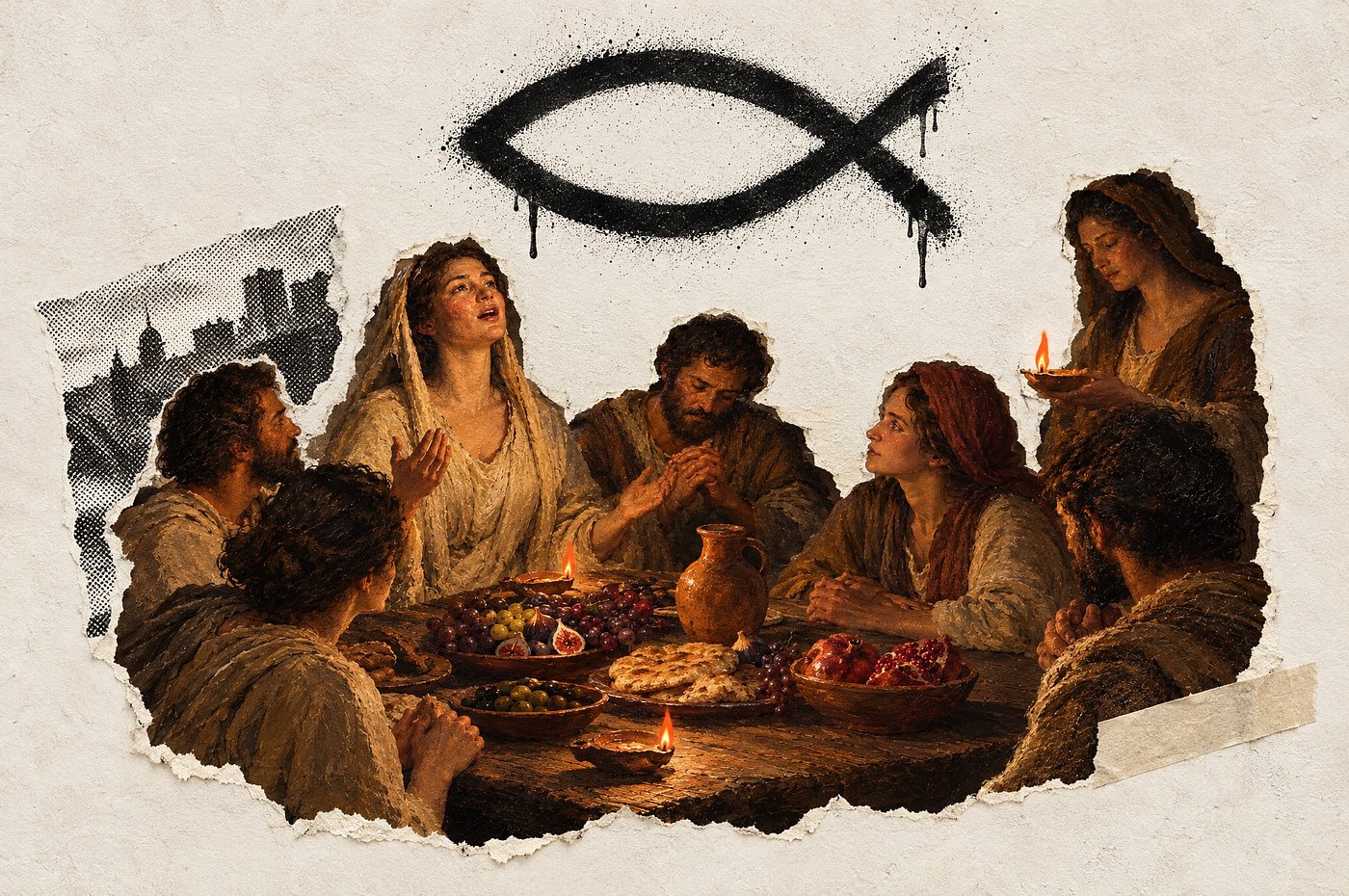
Then Rome put them on record.
Around 112 CE, Pliny the Younger, Roman governor of Bithynia, wrote to Emperor Trajan about a group he called Christiani — the earliest surviving Roman record of the name. They gathered before dawn, sang hymns to Christ, swore oaths against fraud and theft — then shared "ordinary and harmless food." (cibum promiscuum tamen et innoxium — Letters 10.96)
Innocent. Harmless. Rome's first Christians on record, eating without blood on their hands.
And the temples had gone quiet — Pliny admits the sacrificial animals had found scarcely any buyers. So he put the accused to a test: invoke the gods, offer wine and incense to the emperor's image, curse Christ. Those who refused, he executed. Trajan approved. Then Pliny reports the result: the temples filling again, the sacrificial meat selling everywhere.
The original Christians didn't just eat differently. They died for it.
It's the buried history at the heart of the film Christspiracy. And it's why they needed a secret sign…
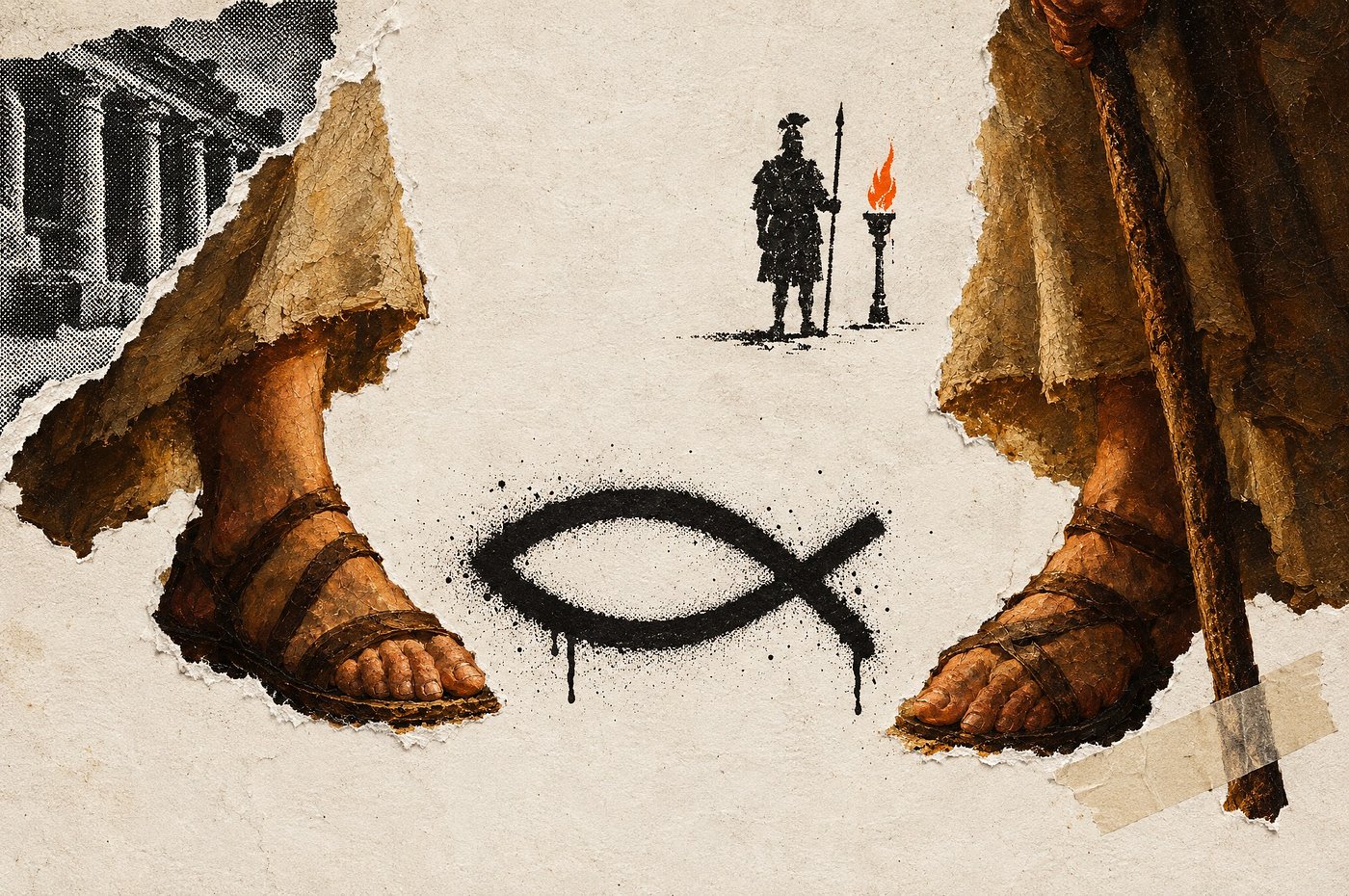
A symbol older than the cross.
Before anyone wore a cross, the early followers used a fish. Not decoration — a lifeline. As the story goes, one person traced an arc in the dirt with a sandal. If the other completed it into a fish, you were safe. You were family. You were The Way.
The fish was ICHTHYS — Greek for "fish," and an acronym hiding in plain sight: Iēsous Christos Theou Yios Sōtēr. Jesus Christ, Son of God, Savior. Five words. One fish. The most dangerous graffiti in the Roman Empire.
And it runs through the gospels. Jesus didn't call fishermen to keep fishing — He called them to stop. "Follow me, and I will make you fishers of men." (Matthew 4:19) The nets they dropped became the sign of a movement that spread faster than Rome could stop it.
Then there's the catch in John 21: exactly 153 fish. Not a round number. To the Pythagoreans — whose number-mysticism ran through the ancient Jewish world (Josephus compares the Essenes to them) — 153 is a triangular number, the sum of 1 through 17. It's also bound to the vesica piscis, the two overlapping circles that draw the fish shape itself: the ratio 265:153 approximates √3, the proportion of that very shape. Divine multiplication, hidden in the number of fish in a net — waiting for someone to notice…

x> — a more angular fish for a new generation of anglers.
X is the ancient sign for Christ — Chi, the first letter of Christos, which is why we write Xmas. > means greater than: "You will do even greater things than these." (John 14:12)
X also means multiply. Paired with "greater than," it's multiplication without limit — exactly how Jesus said the kingdom grows.
Together: Multiply Greatly. Genesis 48:4 — "I will make you fruitful and increase your numbers." Acts 6:7 — "the number of the disciples multiplied greatly in Jerusalem." And in Genesis 48:16, the Hebrew for "multiply greatly" is yidgu (יִדְגּוּ), from dagah (דָּגָה) — to multiply like fish — from dag (דָּג), fish. In Hebrew, multiplying and fish share a root. That's why He chose fishermen. That's why He multiplied loaves and fish. Not by force — exponentially, organically, unstoppably.
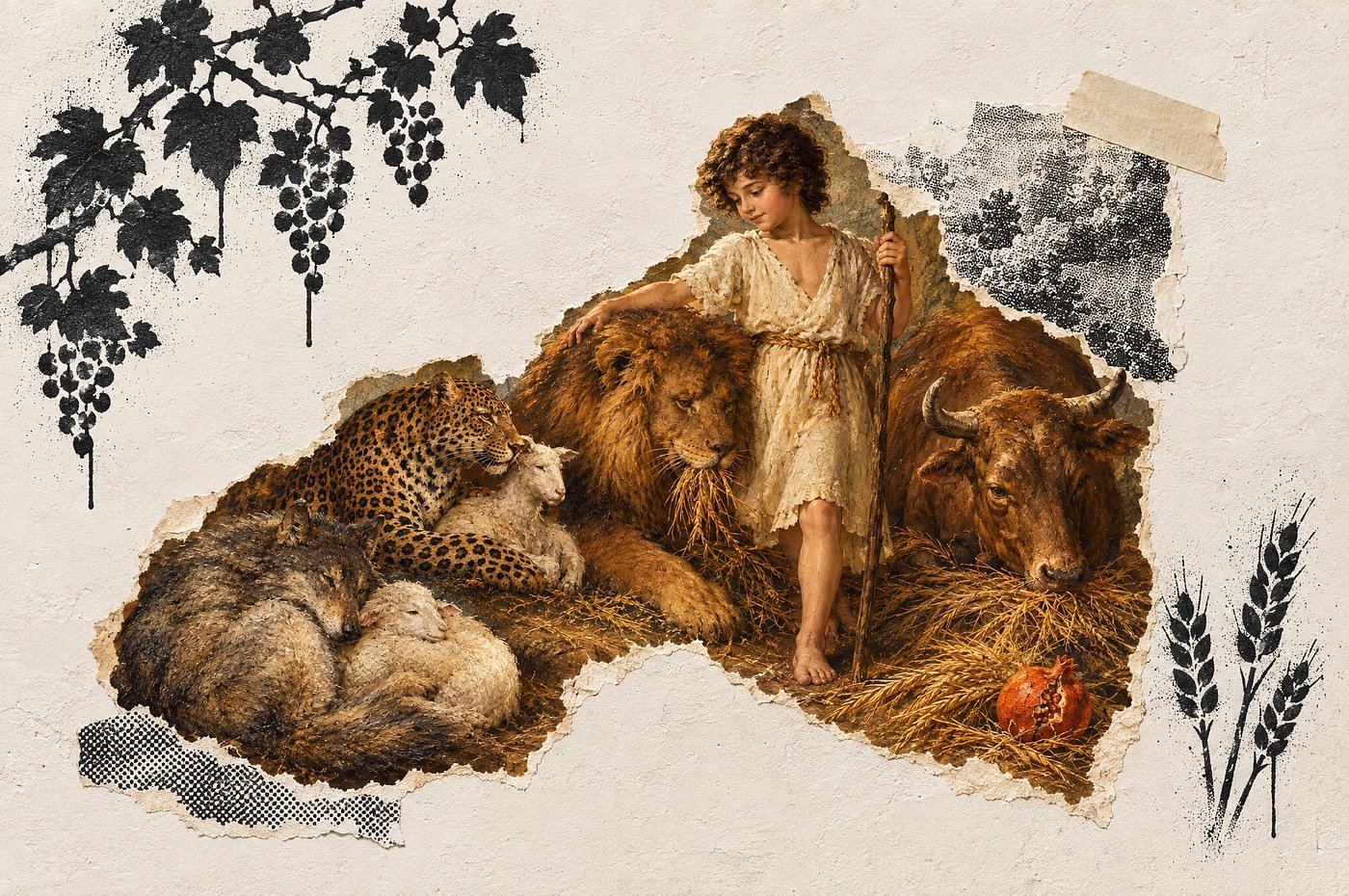
The kingdom: the original design, restored.
Isaiah 11 — the "Branch" prophecy (netser, נֵצֶר) behind the name Nazarene — describes the coming kingdom: the wolf with the lamb, the lion eating straw like the ox, a little child leading them. "They shall not hurt nor destroy in all my holy mountain." No predation. No slaughter.
Irenaeus preserved a saying of Jesus about that age, handed down through Papias from those who knew John: vines of ten thousand branches, grain of ten thousand ears — and "all the animals using these foods drawn from the earth will in turn become peaceful and harmonious with one another." (Against Heresies 5.33.3–4) The whole creation, back to Genesis 1:29.
X marks the spot. And > is a sideways V — for vegan.
One more thing: X is the mark of straight edge — the punks who refused alcohol and drugs, and many of them animal products too; who chose clarity over complicity. James drank no wine and ate nothing ensouled from birth. The original straight edge. So x> says something new: Jesus is vegan. Maybe the most punk-rock thing you can say today — and the most historically grounded.
Here's what we're building.
The kingdom isn't coming later. It's already here, pressing through the surface — "the kingdom of God is in your midst" (Luke 17:21) — waiting for enough people to see it at once.
Before MAHA, the Maharishi's meditators set out to measure it: when a critical mass shifts its consciousness, they claimed, the whole field shifts with it. They called it the Maharishi Effect. Jesus called it yeast.
Yeast working through the dough until the whole loaf rises. A mustard seed becoming a tree where every bird can nest. And the operating logic: "Whatever you ask in prayer, believe that you have received it, and it will be yours." (Mark 11:24) Not will receive. Have received.
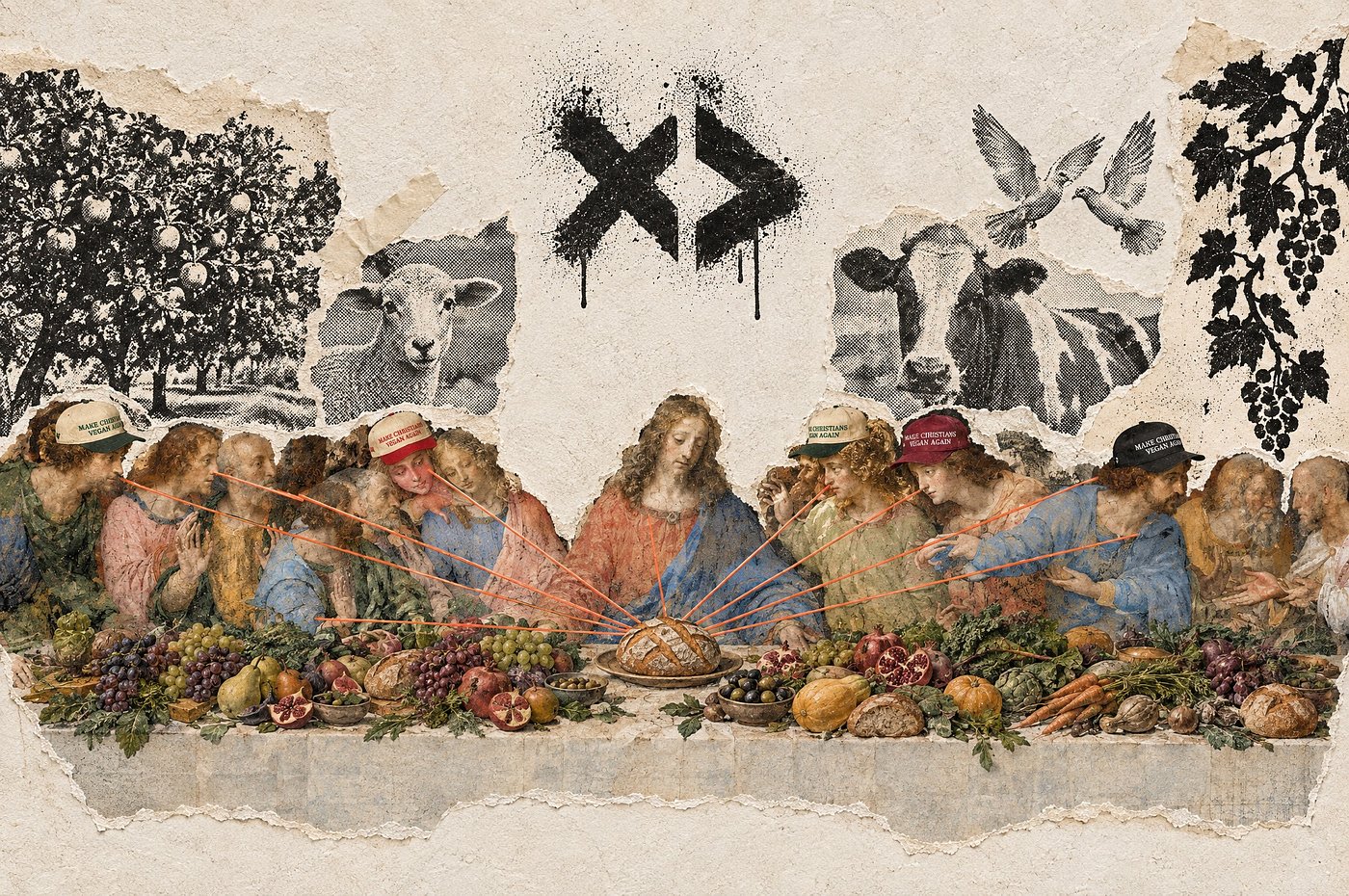
“Go ye into all the world, and preach the gospel to every creature.” (Mark 16:15)
Gospel — euangelion — literally, good news. Not just every person. To every creature.
That's the logic of the hat. The mantra of the movement. Not wishful thinking — enough aligned conviction reaching critical mass.
Genesis 1:29 was the blueprint. The Nazarenes lived it. James practiced it from birth. Pliny recorded it. Epiphanius confirmed it. Isaiah prophesied its return. Jesus described its fullness — grain, grapes, and peaceful animals, all the way down.
And for two thousand years, most of the church forgot it.
We're here to remember. And to multiply.
Welcome to MXVA. Make Christians Vegan Again. Be Fruitful. Multiply Greatly.








Walk The Way
You've read the history. Now live it, walk it together, and see the whole story.